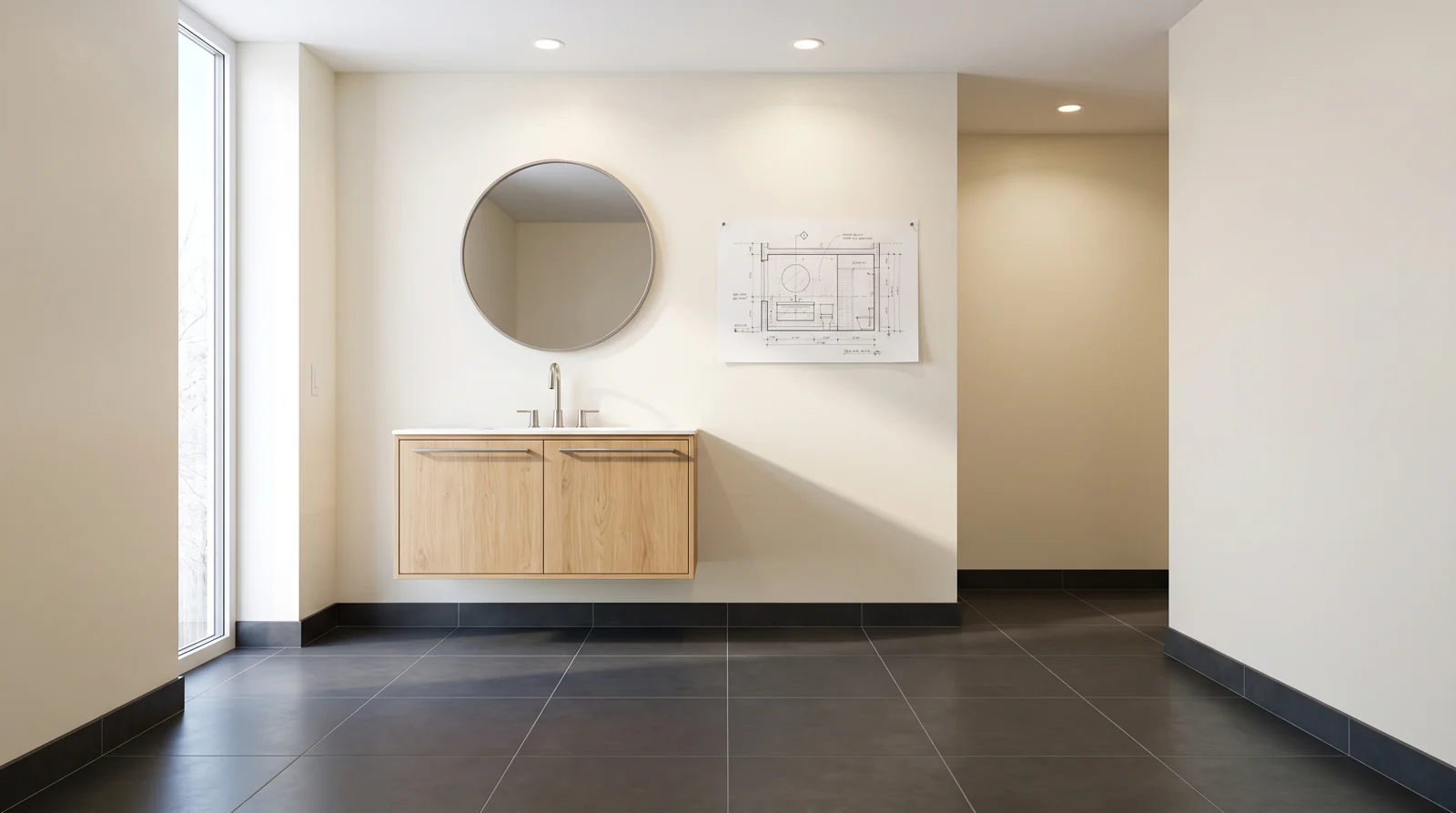
Quick answer: Cream paint can work with dark tile, but choose the cream around the floor you are keeping. Clean the tile, identify its brown, blue or neutral cast, then test substantial painted wall patches in daylight and your usual evening lighting. Repaint when a compatible cream fixes the mismatch. Consider retiling when the floor itself has condition, use or design problems that paint cannot solve.
1. Separate a color problem from a floor problem
For a late 2026 winter refresh in Crestview or Allandale, start with the existing bathroom rather than a room photo online. Remove the bath mat and look at the floor beside the vanity, toilet and doorway. Decide whether you dislike the darkness, the underlying color or the condition.
A sound charcoal floor with an awkward yellow wall is a different project from cracked tile beside a moving vanity. Mark cracks, loose pieces and recurring grout damage for inspection before making cosmetic decisions. Our guide to cracked tile diagnosis explains why the cause matters.
Cream and dark tile are a design recommendation here, not a measured Austin winter sales trend. Keeping a serviceable floor can be the right choice.
2. Name the dark tile tone before choosing cream
Dark does not automatically mean neutral. Hold a plain white card beside the tile and note whether the floor looks like charcoal, espresso brown or a cooler blue gray. Include the countertop and any tile walls. The porcelain color cannot be changed by adjusting the paint formula.
Benjamin Moore explains that warm whites contain red, orange or yellow undertones, while cool whites can contain green, blue or violet. Comparing whites against existing furnishings helps expose those differences.1
For brown tile, begin with a restrained warm ivory. For blue gray tile, compare a quieter cream against a more neutral soft white. These are starting points, not guaranteed matches. If the first cream looks yellow, try less visible warmth rather than immediately replacing the floor. If it feels stark or chalky, test a slightly deeper ivory before adding more yellow.
3. Clean the floor and include the grout
A gray film can confuse the comparison. Identify the tile material first: ceramic and porcelain guidance is not automatically suitable for natural stone. For ceramic or porcelain, use a cleaner approved for both the tile and grout, follow dilution directions, rinse and remove excess water. Daltile warns that cleaner residue can reduce slip resistance and recommends testing cleaning products in a small area first.2
Once the floor is dry, compare the paint against both a tile face and a grout joint. Pale grout may make the dark floor appear more patterned than expected. A cream wall will not erase that grid. Consult the bathroom grout selection guide if grout repair or replacement is part of the scope. Do not assume fresh grout can simply cover existing joints.
4. Make the contrast test a real wall test
Shortlist three candidates: a restrained cream, a neutral soft white and a slightly deeper ivory. Label each with its exact color name and paint product. Benjamin Moore recommends at least two coats for liquid samples and suggests movable white boards for viewing color around the room. Its sample paint is for color representation, not the final paint job.3
Use boards to narrow the choices, then make a substantial wall patch with the intended finish paint over properly prepared material. Put one patch near the floor and another beside the fixed countertop or tile wall. Follow the product directions for preparation, recoating and curing. Judge color only after drying; let the final test patch reach the stated cure stage before judging washability or the finished surface.
View each candidate alone, with competing samples covered. Check morning daylight, a dim afternoon and the actual vanity lights at night. Keep the bathroom door open for one comparison so the adjoining hallway stays in view. A phone photo can record choices, but decide in the room.
5. Choose repainting or retiling from the results
Good: Keep sound tile and repaint when one cured wall sample works beside every fixed finish. Confirm wall preparation, paint product and sheen before buying the full quantity.
Better: Keep the tile but address a specific distraction, such as damaged grout or mismatched lighting, alongside the repaint. Agree on repairs before finalizing the color. Changing everything at once makes it harder to identify what solved the problem.
Best for a floor that fails the test: Plan replacement when the dark tile still feels wrong with all acceptable wall colors, or when its condition or suitability needs correction. More demolition is not automatically better.
If replacement is chosen, review vanity and floor tile sequencing. Settle removal, floor coverage, plumbing access and finished heights before painting. Complete dusty demolition and wall repairs before the final finish coats, with floor protection and touchups included in the trade plan.
6. Bring a clear sample and quote checklist
Bring paint labels, room dimensions, daylight and evening photos, plus a spare tile if available. Note which fixtures stay and whether this is the home's only bathroom. Request separate written scopes for keeping the tile and replacing it, including preparation, disposal, grout work, trim, fixture handling and return to use requirements. Samples, supply and installed price need project confirmation.
Contact CC Floors Austin to discuss the floor decision with Dan. Call 512-769-2292 or text 713-444-4625. The address is 2105 Justin Lane, Suite 110, Austin, TX 78757. Bring the contrast test results so the conversation starts with what your room needs.
Related winter reading
- High Contrast Tile in Austin: Keep It or Soften It for 2026?
- 2026 Paint Color Announcements and the Floors They Suit
- Austin Winter Visitors: A 2026 Flooring and Paint Calendar
Frequently asked questions
Why does cream paint look yellow beside charcoal tile?
The cream may have more visible yellow warmth than the floor and other finishes can comfortably support. Compare it with a less warm candidate in the same lighting before blaming the tile.
Can I choose cream paint from a phone photo?
Use photos to organize options, not approve the color. Benjamin Moore notes that screen representations can differ from actual paint. Test real paint in the room.
Is sample paint suitable as the finished bathroom wall paint?
No. Benjamin Moore's liquid samples represent color and do not contain the performance components of its regular paints. Confirm the final wall product and sheen separately.
Should I replace good dark tile just to match cream walls?
Not as the first step. Test compatible wall colors and inspect the floor first. Replacement makes sense when the remaining appearance or condition problem is important enough to justify the full scope.
Sources and resources
- Benjamin Moore: The Ultimate Guide to White Paint Colors
- Daltile: Ceramic and Porcelain Tile Care Instructions
- Benjamin Moore: Tips on How to Sample Paint Colors
Discuss your winter project
Thank you for considering CC Floors Austin. Request a project consultation, call 512-769-2292, text 713-444-4625, or email dan@austinflooringco.com. Confirm measurements, material selection, preparation and scheduling in a written scope before work begins.